Introduction: The End of the Automated Honeymoon
In the rapid evolution of American higher education, the years 2023 through 2025 were characterized by an almost frantic adoption of generative tools. However, as we cross into the 2026 academic year, a profound “Post-AI Pivot” is taking place across US campuses. From the University of California system to the Ivy League corridors of the East Coast, the realization has dawned: while AI can summarize, it cannot innovate.
This recalibration is driven by a sophisticated shift in how academic performance is measured. Standardized grading has moved beyond mere syntax toward Information Gain—the measure of new, unique value brought to a discussion. As professors employ increasingly nuanced detection methods that identify “synthesized neutrality,” students are finding that the only way to secure top-tier GPAs is through a rigorous, traditional drafting process.
For many, this journey begins with a strategic search for a partner who understands the local academic landscape. When students look to write my paper USA style services, they are no longer seeking a button to generate text; they are seeking an editorial architect. They need a specialist who can navigate the specific rhetorical expectations of American faculty, ensuring that the “Human Signal” remains loud and clear amidst the digital noise.
Why the “AI Echo” is Failing the American Student
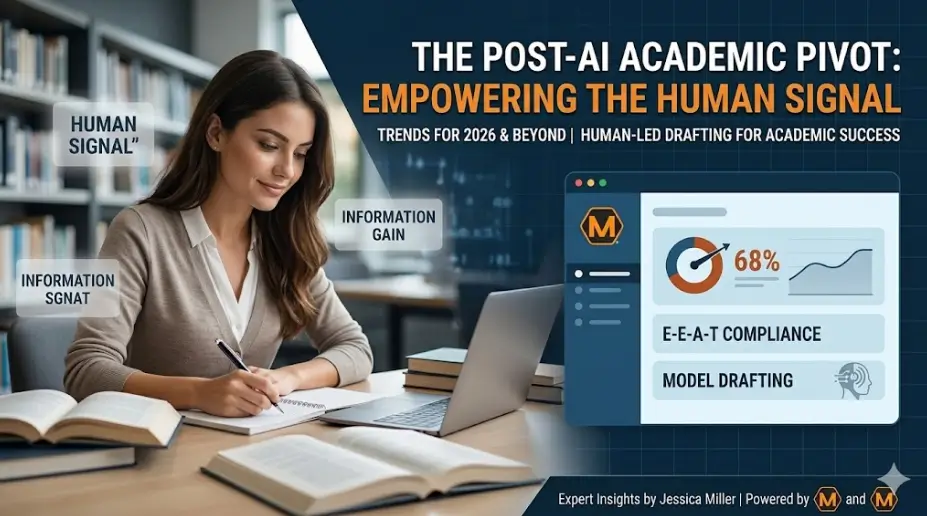
Data from recent university surveys suggests that over 68% of US professors have adjusted their rubrics to specifically penalize “synthesized neutrality.” The problem is termed the “AI Echo,” where a model simply repeats training data without adding a new perspective. In departments like Political Science, Sociology, and Law, where the Expository Essay is king, this lack of depth is fatal for grades.
The American educational framework thrives on the “Individualistic Argument.” US rubrics heavily weight the Voice of the Author. Because AI models are trained to be the “average” of all human knowledge, they inherently lack the “spikes” of insight that lead to an ‘A’ grade. Consequently, students who buy expository essay blueprints from professional services are often doing so to see how a human expert bridges the gap between data and personal analysis—something an LLM simply cannot replicate through statistics alone.
The Structural Advantage of Human Outlining
One of the most significant reasons for the pivot back to manual work is structural integrity. AI-generated essays often suffer from “Circular Logic,” where the conclusion merely restates the introduction in different words.
In contrast, a human-centric draft follows a linear progression of increasing complexity. This is especially true for students targeting the US market, where the demand is for a persuasive, culturally nuanced narrative that speaks directly to American academic traditions. This is why many choose to buy expository essay samples; they are investing in structural templates that have been proven to satisfy the “Logic-First” requirements of US STEM and Humanities departments.
Conclusion: The Future is Hybrid, but Human-Led
The “Post-AI Academic Pivot” doesn’t mean the total abandonment of technology. It means the subordination of technology to human intellect. For the American student, the essay remains the most powerful tool for demonstrating critical thinking. By returning to traditional drafting methods and seeking expert human mentorship, students are ensuring that their academic record reflects their true potential, not just their ability to prompt a machine.
See also: The Role of Technology in Modern Education
Frequently Asked Questions (FAQ)
Q: Why is AI-generated content struggling in US colleges now?
US colleges have shifted rubrics to prioritize “Information Gain” and the “Human Signal”—elements that statistical models cannot reliably produce without human intervention.
Q: How does traditional drafting help with E-E-A-T?
It ensures every claim is backed by a verified, high-pedigree source and that the author’s unique perspective is visible in the analysis.
Q: Is it safe to use writing services in the USA in 2026?
Yes, as long as the service focuses on editorial mentorship and model drafting. The key is using these services to understand structure and Information Gain, rather than submitting unedited work.
About the Author
Jessica Miller is a Senior Content Strategist and Academic Consultant at MyAssignmentHelp. With over a decade of experience in the US higher education sector, Jessica specializes in helping students navigate the complexities of modern academic integrity and the nuances of high-level expository writing. She is a staunch advocate for “Human-First” content and E-E-A-T principles in digital learning.
References & Data Sources
- Chronicle of Higher Education (2025): “The Decline of AI-Reliance in Undergraduate Writing.”
- Pew Research Center: “Trends in US Academic Technology Adoption 2024-2026.”
- National Education Association (NEA): “The Role of Human Mentorship in the Age of Generative Engines.”